
Safety-first troubleshooting
We check for gas odors, venting issues, overheating signs, and active leaks before we go deeper. If a condition is unsafe, you will know right away.
Serving Phoenix, Arizona & surrounding areas
Hot water help, 7 days a week
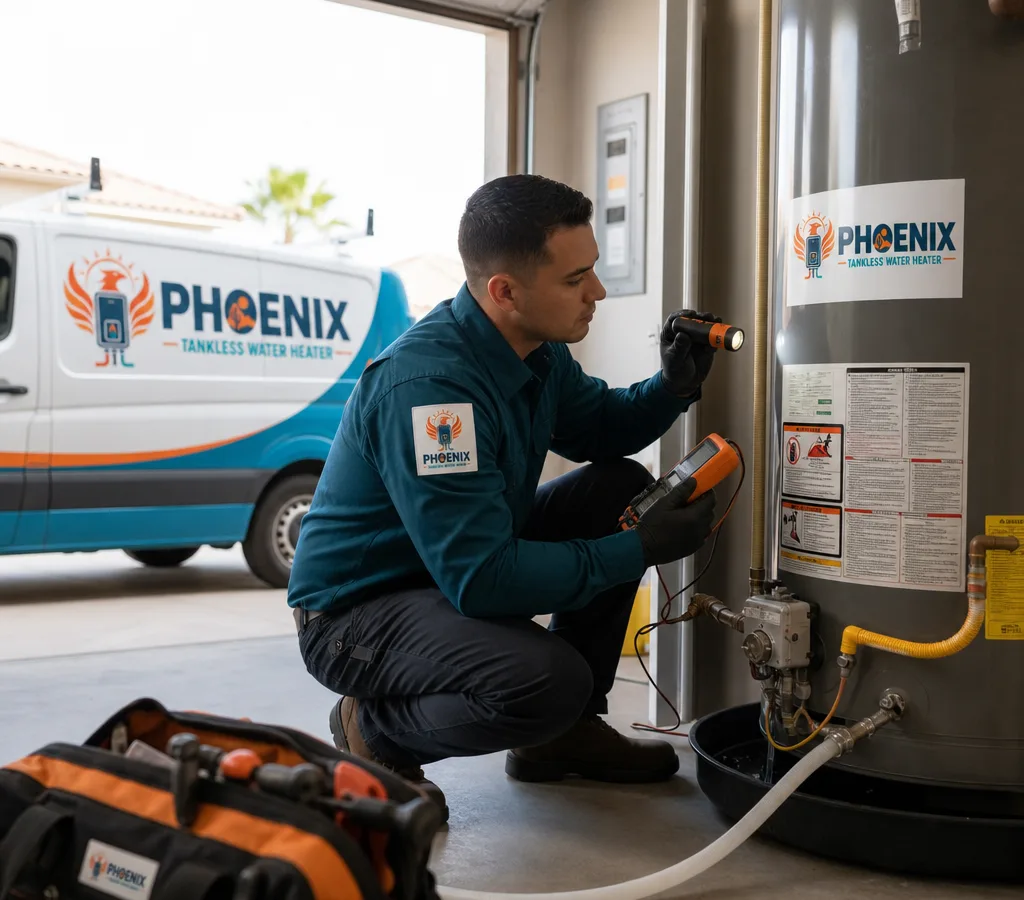
Water heater repair in Phoenix, Arizona
No hot water, leaking tank, or a burner that will not stay lit? We troubleshoot the problem, explain options in plain language, and restore reliable hot water with upfront pricing and clean workmanship.
Accurate local diagnosis
When your water heater fails, the symptoms look similar—cold showers, odd noises, or water around the tank—but the fixes are not. Phoenix hot water heater repair starts with the right diagnosis. Gas control issues, heating element failures, sediment buildup, venting problems, or a failing T&P relief valve can all show up as “no hot water.” Our job is to find the actual cause, confirm the safest path forward, and get your system running again.
Phoenix Tankless Water Heater provides water heater repair Phoenix homeowners rely on when timing matters. We work on common residential water heater types found around Phoenix, including gas and electric tank units and tankless systems. We come prepared to test components, verify combustion air and venting where applicable, and check for active leaks before recommending any repair.
If you are still deciding who to hire, start with Phoenix Hot Water Heater for a local team that keeps the focus on clear communication, careful troubleshooting, and repairs that make sense for the age and condition of the unit.
Professional repair standards
We check for gas odors, venting issues, overheating signs, and active leaks before we go deeper. If a condition is unsafe, you will know right away.
You get a straightforward explanation of what failed, what it takes to fix it, and whether the unit is a good candidate for repair versus replacement.
Igniters, thermostats, elements, gas control valves, anode rods, and relief valves must match the model and fuel type. We verify model details before installing parts.
We use drain hoses and containment when flushing or draining, protect floors, and leave the area as clean as we found it.
Before work starts, you know what is included. If the plan changes after inspection, we talk it through first.
We coordinate access, confirm shutoffs, and plan for safe testing so the repair visit stays efficient.
Symptoms and likely causes
If you are searching for hot water heater repair Phoenix, these are the issues we see most often:
If your home is in an area with older plumbing layouts, like parts of Encanto Village, we also pay close attention to shutoff valve condition and access. In newer builds common in Ahwatukee, the heater is often in a garage closet with tighter clearances, so we plan the repair to keep the area safe and orderly.
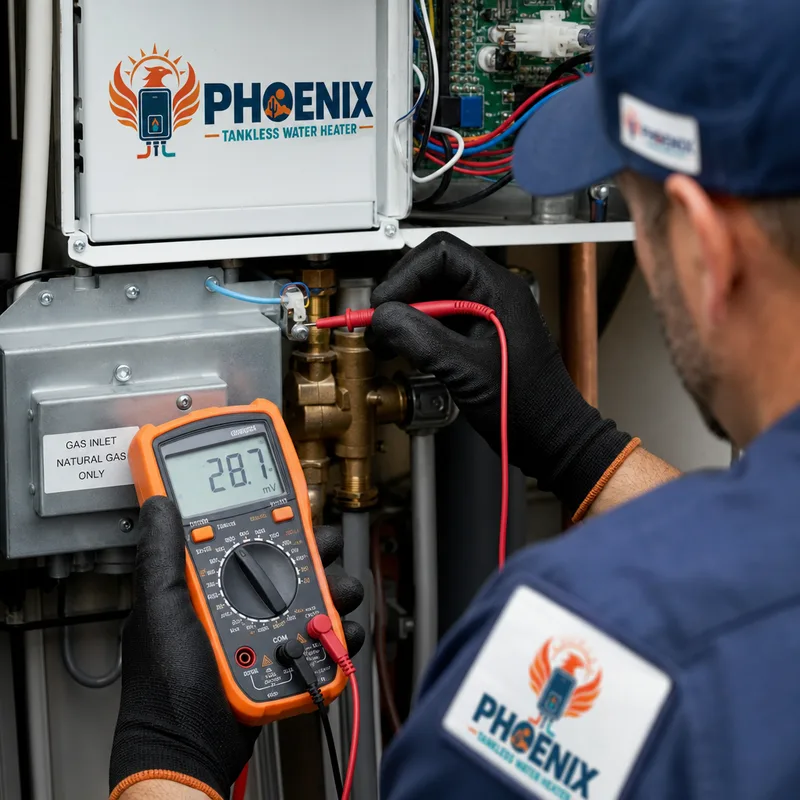
From diagnosis to verified operation
We start with what you are seeing—no hot water, leaks, noise, or error codes—and confirm basics like power, breaker status, gas supply, and shutoff positions.
We test the likely failure points for your exact heater type: elements and thermostats for electric, ignition and safety circuits for gas, and flow and sensors for tankless. We also check for signs of tank failure.
You get a clear scope of work: what is being replaced or adjusted, what testing is included afterward, and what risks exist if the unit is near end of life.
After the fix, we confirm safe ignition and stable temperatures, verify there are no leaks, and check that the system cycles properly under normal use.
We let you know what to watch for next: flushing cadence, filter cleaning for tankless systems, temperature setting considerations, and when a recurring symptom is a sign to stop repairing.
On-site pricing
Water heater repair in Phoenix typically ranges from about $180 to $900+, depending on the problem and the type of unit. Smaller fixes like a thermostat, heating element, or minor leak at a fitting often land on the lower end, while gas control components, tankless diagnostics with flushing, or multiple parts can reach the higher end.
Your final price depends on whether the heater is gas, electric, or tankless, the specific part needed, access such as a garage closet, attic platform, or tight alcove, and whether sediment buildup or corrosion complicates disassembly. We confirm the exact cost after an on-site inspection and diagnosis.
Choose careful troubleshooting
A good repair is not just swapping a part. It is making sure the heater is safe, correctly set up, and worth repairing.
First, confirm the technician is comfortable with your fuel type. Gas water heaters involve combustion, venting, and safety controls. Electric units require proper testing of elements and thermostats, correct wiring, and verification of the high-limit function. Tankless systems add flow and scaling variables, and error codes only help if the root cause is confirmed.
Second, pay attention to how the diagnosis is done. If the plan is based on guesswork, the same symptom may return next week. A solid diagnosis includes verifying incoming power or gas, confirming the sequence of operation—especially for gas and tankless—and checking for water pressure or cross-connection issues when temperature swings are involved.
Third, be realistic about tank age and condition. If a tank is actively leaking from the body, repair usually is not the right call. If the tank is not leaking and the failure is a control or heating component, repair can be a smart way to restore hot water quickly.
If you are dealing with recurring hot water issues and are weighing a long-term upgrade, we can also discuss when a repair no longer makes sense and what replacement would involve, but this service is focused on getting your existing heater operating correctly and safely.
Answers before service
Same-day water heater repair is often possible depending on scheduling and parts availability, and we prioritize no-hot-water situations. The fastest way to keep the visit efficient is to share the heater type—gas, electric, or tankless—the brand and model if visible, and the exact symptom such as a leak, no hot water, or error code.
If the leak is from a fitting, the drain valve, or the T&P relief valve discharge line, it may be repairable; if water is leaking from the tank body itself, replacement is usually required. We trace the water source first because leaks can travel and drip from a different point than where the failure started.
Popping or rumbling is commonly caused by sediment buildup at the bottom of a tank-style heater, which traps heat and creates boiling pockets. A flush and inspection can help if the tank is still in good condition, but heavy sediment can also indicate the unit is nearing the end of its service life.
If the pilot is lit and you still have no hot water, the issue is often a thermostat setting, a gas control valve problem, or a burner that is not firing consistently. For safety, avoid repeated relighting attempts or adjustments beyond basic temperature settings, and have the heater professionally diagnosed so venting and safety controls can be verified.
Yes, tankless issues often come down to flow, ignition, venting, or scaling, and error codes help narrow the test path. A proper repair usually includes checking inlet screens and filters, confirming adequate gas supply for gas models, verifying venting and combustion air, and flushing if scale is suspected.
If you have an active leak, shut off the cold water supply to the heater if you can do so safely, and avoid touching wet electrical components. If you smell gas near a gas water heater, leave the area and treat it as urgent; do not try to operate switches or relight the unit. When you schedule, we can walk you through safe, basic steps based on your situation.
Schedule a diagnostic visit
Tell us what your water heater is doing right now and when it started. We will schedule a diagnostic visit in Phoenix, pinpoint the cause, and lay out the repair plan and price before any work begins.